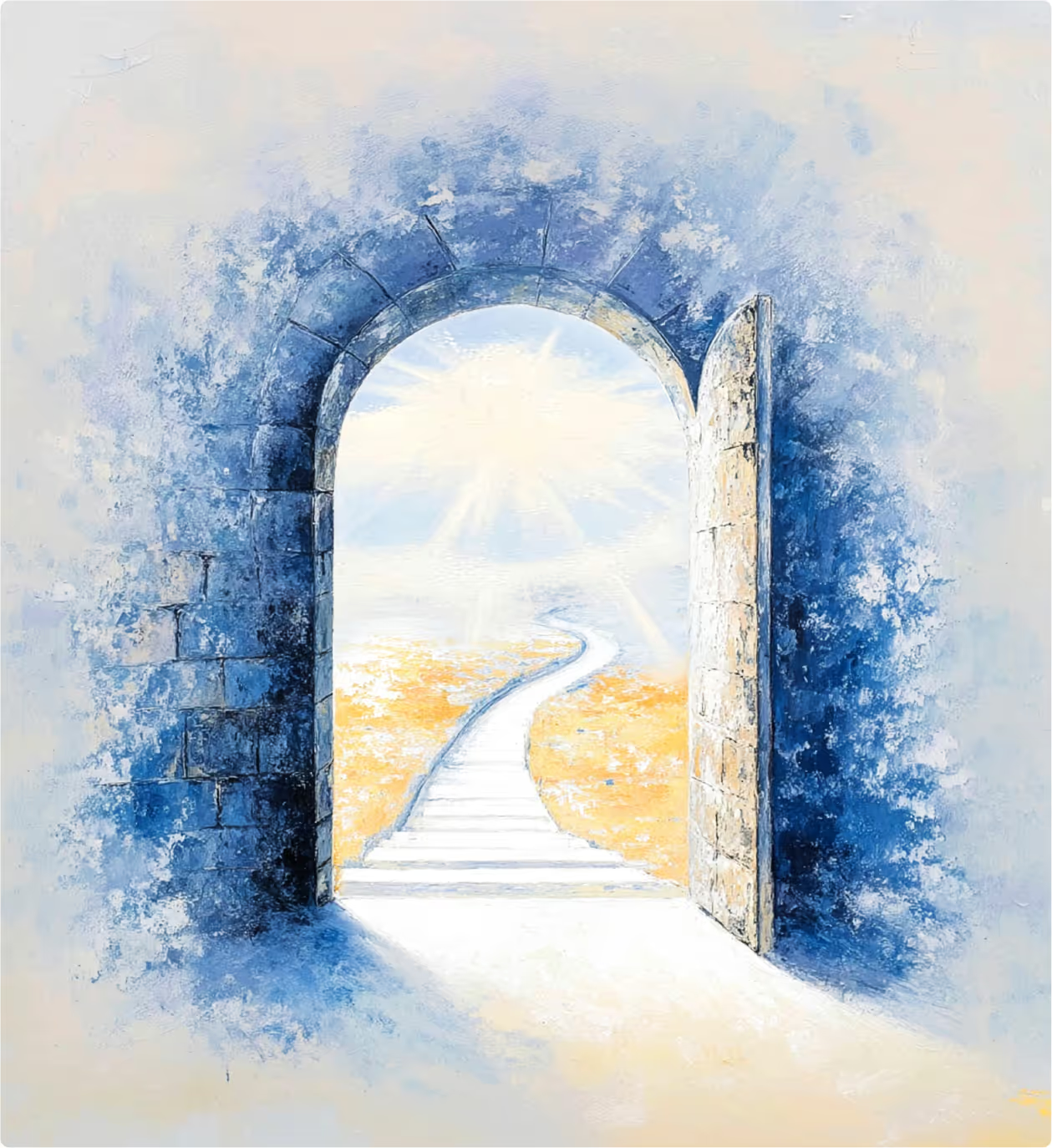
When pain pulls down our prayers, we’re ready for a perspective shift.
There’s a lot going on for the Jewish people these days. A lot of worry and pain. It’s centered in Israel, but it’s touching us all.
For many of us, life doesn’t feel quite the same. The emotions we’re carrying have affected our mood. Our routine. And, along with them, our tefillah.
How do we keep our prayers filled with reverence, with gratitude, with steady focus, when we’re in such emotional turmoil?
A few weeks ago, we mentioned the Nefesh Hachaim’s reference to the Gemara’s teaching that when one davens, “he should cast his eyes downward and his heart above (Brachos 25b).”
To explain this instruction, the Nefesh Hachaim calls upon Rabbeinu Yonah: “[When praying,] one should think in his heart as though he is standing in the Heavens and remove from his heart [any desire] for worldly enjoyment and bodily pleasures. As the early Sages said, ‘When you want to have proper kavanah, separate your body from your soul.’ “
At first glance, this sounds far above our heads. Separate our bodies from our souls? Remove from our hearts desire for worldly enjoyment? Hm, maybe one day.
But what if it wasn’t that hard for us? And what if it was actually the perfect solution for the struggles we’re experiencing in our prayers now?
Let’s start down this path with a question: does your kavana (focus) decrease or increase with the amount of tzar (pain) you’re dealing with?
Many of us would probably answer – well, it depends. When we’re facing sudden distress, when something happens or changes or gets worse, the emotions often overflow easily into our davening.
But when we’re dealing with a chronic situation – she’s still not married, parnassah’s still a struggle, the hostages still haven’t all come home and the bad news is still piling up – our connection to davening tends to erode. And even though we intellectually know no prayer goes unanswered… emotionally, we give up.
Which is why Rabbeinu Yonah’s guidance can change the game.
Think in your heart as though you’re standing in the Heavens.
How do you stand in the heavens? As we learned a few weeks ago, bechira doesn’t exist in the Heavens. There, it’s all yediyah. Prayer is a time when we try to live exclusively in yediyah for a few moments. We ignore our earthly cause-and-effect existence, and look only at the G-dly hand behind the moving chess pieces of our lives.
Good. We understand this. We’ve even practiced it. But what about the second piece of Rabbeinu Yonah’s explanation – the one where he quotes our Sages’ recommendation to “separate our bodies from our souls”?
When we stand on earth, when we’re in bechira-mode, we’re deeply emotionally involved. We’re sad, we’re stressed, we’re frustrated, we’re despairing, and we desperately want things to change.
But when we use our davening time to enter yediyah mode, we distance ourselves emotionally. Instead of being in the thick of the pain and turmoil, we’re looking down at it from above, from a place where awareness of Hashem’s perfect orchestration surrounds us.
Picture this for a moment: we’ve finished our work in this world. We’re basking in G-d’s endless goodness, fully aware of the perfect truth and love in every challenge He sends down to earth. And from that vantage point, we’re watching the events of today unfold.
What are we feeling? What are we worried about? Do we see things, even the most distressing things, the same way we did when we were alive?
Of course not.
Back to our present-day lives: when we daven “from the Heavens,” we’re davening from that same detached, elevated place. We’re able to observe and empathize with our earthly existence, but we’ve stepped out of it for a bit – stepped above it.
Freed from that burning need for our dreams to come true, for our suffering to end, we’re able to absorb some perspective. We're able to see the G-dly master-plan unfolding in front of us, as described in the words of tefillah.
Then we’re able to praise Hashem for the awesomeness of what we see – shevach. To ask that it continue, and that any missing pieces fall into place – bakasha. And to express our gratitude for its perfection and for our place in it – hoda’ah.
Before our next Shemoneh Esrei, let’s take a moment to make this shift. To step out of the center of our challenges, needs and fears – and into heavenly-spectator mode.
We’ll feel freer. Less conflicted. More connected. Empowered by the faith and security we find in the realm of yediyah – and re-energized to invest our full hearts in our prayers.
More Articles in this Series
Subscribe to the weekly list
.avif)